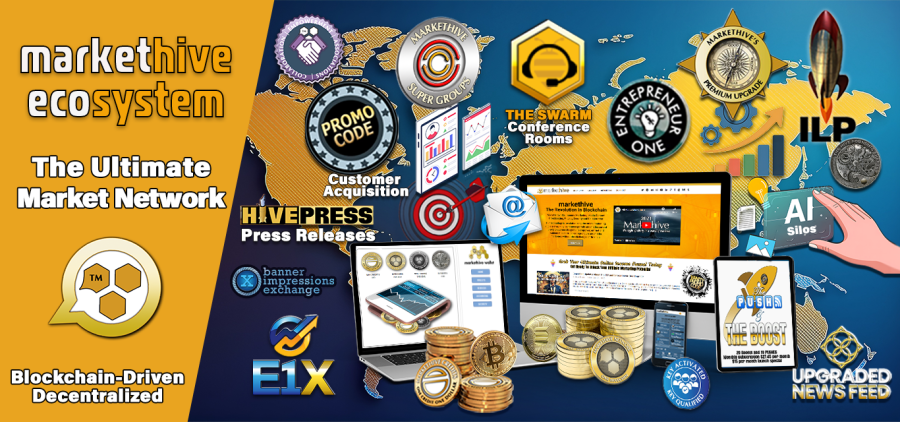
A robust customer acquisition plan is essential for any company
seeking to expand its base and forge enduring customer relationships.
This involves a strategic process of attracting, nurturing, and
converting leads into loyal, dedicated clients. A well-defined strategy
not only helps attract the right leads but also significantly increases
the potential for long-term customer retention.
This
article delves into the core of customer acquisition, exploring its
objectives and providing practical techniques for success. Crucially, it
highlights Markethive's unique role as a specialized
customer-acquisition channel. Going beyond a typical inbound marketing
platform, Markethive is a powerful tool designed to help both
established companies and individuals looking to start a business
achieve this vital growth objective.
By
leveraging Markethive's distinct capabilities, businesses can
dramatically enhance their customer acquisition efforts. Furthermore,
Markethive's innovative customer-acquisition model and collaborative
co-op marketing campaigns offer individuals a path to generating a
sustainable, perpetual income stream.
Why Are Customer Acquisition Strategies Important?
Customer acquisition is fundamental to business prosperity.
This crucial process involves successfully attracting and converting
prospects into committed clients. Its significance extends beyond these
direct outcomes, serving as a primary engine for expanding the customer
base, increasing revenue, and cultivating a strong brand reputation.
A
steady stream of new customers is essential for business growth and a
stable income. Satisfied customers often become powerful brand
advocates, generating positive buzz that attracts more business.
Ultimately, customer acquisition is a pivotal driver of sustained,
long-term business success.
A
deliberate, consistent approach to acquiring new customers is vital for
moving beyond isolated tactics and establishing a dependable framework
for future growth. Moreover, consistently converting new customers is a
powerful demonstration of market traction to key external parties,
including investors, partners, and influential figures, assuring them of
the business's health and expansion potential.
.png)
Customer Acquisition: Channels and Categorization
Businesses employ a variety of channels to introduce their products
or services to prospective customers. These customer acquisition
channels include organic search, social media, referrals, and email,
among others. The strategies used for customer acquisition can be
broadly organized into categories such as paid versus unpaid methods or
inbound versus outbound marketing approaches.
Blogging: A Foundation for Content Marketing Success
Content
marketing, at its core, involves creating and promoting content that is
relevant and compelling to your target audience, ultimately driving
them to action. The primary objective is to connect with your audience
and convert them into customers, meaning every piece of content should
include a clear call to action. This strategy is vital for customer
acquisition and growth across all industries.
In
an era of deceptive advertising and declining consumer trust, content
marketing serves as a gesture of goodwill. It communicates, "We are
passionate about our work and eager to share our knowledge with you at
no cost."
Blogging
is a particularly valuable element of a content marketing strategy for
businesses of all sizes, sectors, and target audiences. By consistently
producing fresh, captivating, and relevant blog posts, businesses can:
- Attract and Engage: Draw potential customers to their website.
- Establish Credibility: Showcase expertise and build trust with readers by delving into diverse subjects.
- Sustain Interaction: Continuously engage the audience by sharing visuals, posing questions, or presenting compelling calls to action.
A robust blogging system is a cornerstone of any successful customer acquisition strategy. A platform like Markethive's blogging system
provides a dedicated hub for content creation and distribution. This
allows businesses and individuals to communicate effectively across
various formats, including press releases and sponsored articles, making
it a powerful tool for attracting, engaging, and converting potential
customers.
(Learn more about effective customer acquisition through content creation with Content marketing.)
Strategic Social Media Marketing
To
maximize the return on your social media marketing efforts, a solid
strategy is essential. Without one, posting can feel like shouting into a
void, yielding little reward for significant effort. The key to success
lies in thoughtfully selecting the right platforms. By accessing
networks that reach a well-defined audience relevant to your business,
you can transform social media from a time-consuming, fruitless activity
into a powerful customer acquisition tool.
A
strategic approach involves understanding your target audience and
choosing platforms that align with their demographics and interests. For
example, if your audience is predominantly male, platforms like
Pinterest (used by only 15% of men) may be less effective. Conversely,
incorporating Facebook, Instagram, and Snapchat would be a wise move if
your focus is on millennials. By aligning your strategy with your
audience, you can maximize your efforts and feel empowered in your
customer acquisition journey.
Markethive
distinguishes itself as a significantly superior channel for customer
acquisition, primarily through the power of its fully integrated,
proprietary social media platform. This core feature is the engine that
drives a highly engaged, active community, creating a rich environment
for interaction and organic reach.
The
platform's advantage is its ability to distribute content seamlessly.
Users broadcast to both the Markethive ecosystem and external social
media, maximizing exposure and reducing effort. By centralizing content
and fostering an internal community, Markethive provides a more
efficient, integrated, high-conversion pathway for businesses to acquire
and retain customers.
Video Marketing: A Versatile Content Strategy Component
While
video production can seem complex, it is more accessible than ever due
to the affordability of high-quality cameras and the availability of
freelance professionals. Incorporating high-quality video is a vital
component of a comprehensive content strategy. To create engaging
content for your audience, consider outsourcing scriptwriting, editing,
production, and animation to freelancers or specialized production
agencies.
The
key advantage of video production is its versatility: you can promote
your content across various channels, including search, display ads,
organic social media, and paid social media posts. Furthermore,
embedding videos within your blog posts and pages is an excellent way to
better engage readers and increase the likelihood of converting them
into customers.
Intelligent Email Marketing: Elevating Engagement and Strategy
Successful
email marketing relies on more than just compelling email content; it
requires closely monitoring your email list's behavior and adapting your
strategy accordingly. For instance, a new subscriber is typically eager
to learn more about your business. However, if they don't engage with
your first few emails, it's crucial to refine your approach by testing
different calls to action to find what resonates best.
Markethive
is poised to introduce a transformative set of tools designed to
significantly boost the efficacy of email communication: the forthcoming
Smart Responders.
These are not simply automated follow-up tools; they are an intelligent
suite engineered to provide granular, detailed tracking of every
recipient interaction. By offering this deep level of insight, these
tools empower marketers to gain an unparalleled understanding of
audience engagement and behavioral patterns.
Customer Spotlights: Turning Customers into Promoters
A
powerful strategy for acquiring new customers is to transform your
satisfied clients into enthusiastic promoters. By empowering existing
customers to share their positive experiences, you can significantly
reduce the time and cost associated with other acquisition methods. This
approach leverages the credibility and trust your customers have built
with their networks, leading to greater brand visibility, authentic
word-of-mouth referrals, and, ultimately, new customer acquisition.
Actively
invite customers to share their journey with your business. Develop
case studies, conduct interviews, solicit reviews, or encourage
user-generated content that highlights why they chose your business and
what makes it special. Rather than relying solely on paid advertising or
company-led social media promotion, let your customers spread your
message by sharing their authentic stories.
Markethive
makes sharing content across its platform and beyond straightforward,
helping you build a viral loop that drives your customers' followers
back to your business. While a positive message is impactful, its value
multiplies when your clients can easily share your pre-generated
content, such as social media posts, articles, or graphics. The easier
it is for customers to promote your business, the more likely they are
to actively participate.
Search Engine Optimization (SEO)
Search
Engine Optimization is now a critical component of global marketing
strategies, establishing itself as a leading, cost-effective method for
customer acquisition. While complex and not an exact science, SEO
involves strategies to improve content visibility in organic search
results. Effective techniques are essential for boosting content
rankings.
A fundamental aspect of SEO is maximizing a content's "indexability,"
making it easy for search engines to access, interpret, and display in
search engine results pages (SERPs). To achieve this, key optimization
tactics include:
- Including the primary keyword in the post title.
- Providing alternative text for images.
- Attaching transcripts to video and audio materials.
- Creating internal links throughout the website.
Promo Codes: Generic and Vanity – The Ultimate Customer Acquisition Tool
To
effectively persuade customers, especially those unmoved by typical
endorsements, more than just words and promises are often necessary. A
highly effective strategy for attracting customers and building loyalty
is hosting giveaways, allowing them to sample products or services
risk-free.
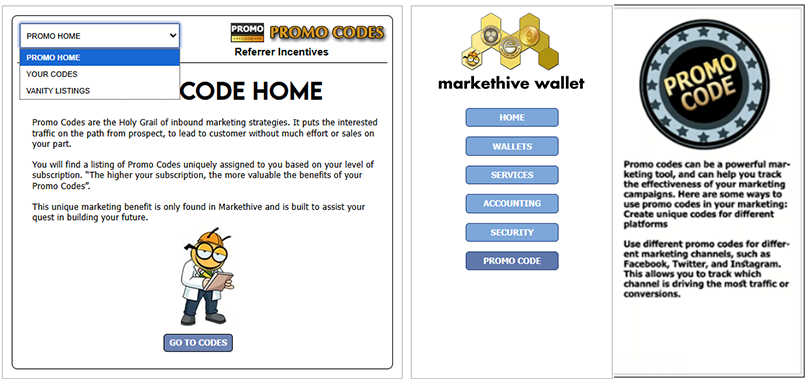
Promo
codes are considered the pinnacle of customer acquisition strategies
due to their high value. They efficiently transition prospects into
leads and then customers, minimizing the need for extensive sales
efforts. Offering something for free is universally appreciated, and
promo codes are the ideal incentive to encourage interested customers to
experience a product or service before committing to a purchase.
Markethive's Promo Codes
offer dual benefits: not only do they attract new customers, but they
are also essential for measuring the success of your marketing efforts
and the performance of specific campaigns. By distributing these codes
across various online channels, you can engage current customers,
acquire new ones, and collect valuable data to inform and refine your
overall marketing strategy.
Compelling and High-Converting Landing Pages
The
digital landscape demands highly focused, conversion-driven web assets.
Optimized landing pages are not merely an option but an essential
component of any effective digital strategy, serving as a clean, focused
entry point that efficiently guides prospective customers and leads to
your specific product, service, or call to action.
Markethive
is addressing this critical need with the upcoming launch of Sitemaker,
a powerful, advanced, and highly visual platform for marketing and
website creation. Sitemaker is engineered to empower marketers,
entrepreneurs, and businesses of all sizes to design, deploy, and manage
these crucial assets with unprecedented ease and sophistication.
Key Features and Capabilities:
- Diverse Publishing: Create full websites, dedicated landing pages, or integrate using a WordPress plugin.
- Domain Flexibility: Use a Markethive subdomain or connect your custom domain.
- Advanced Tools: Access sophisticated features like a Widget Maker and Group Marketing Tools.
- A/B Testing with a Twist:
Uniquely leverage the Markethive social network, offering Hivecoin
incentives for users to vote on their preferred page designs.
- Integrated E-commerce: Easily integrate E-commerce capabilities, including Shopify.
- Analytics and Editing: View site statistics on the thumbnail page and manage edits efficiently within a pop-up window.
- AI Assistance: An upgraded version will include AI assistance for enhanced creation.
- Subscription Tiers: Available at various levels, including a comprehensive free tier.
To
sum up, these customer acquisition strategies are interconnected and
complementary. For example, using social media or a marketing platform
can disseminate SEO-optimized content featuring a call to action,
encouraging readers to sign up for an email list. In other words, they
work together seamlessly.
.png)
Markethive: The All-In-One Channel For Customer Acquisition
Markethive is developing into a complete, unified platform equipped
with essential customer acquisition channels, cutting-edge tools, and
proven strategies described above, for modern digital marketing success.
This strategic focus is designed to empower entrepreneurs, small
businesses, and established enterprises alike to effectively identify,
attract, nurture, and convert leads into loyal customers.
Markethive's
core offering is a meticulously developed, comprehensive digital
marketing and business management platform, anchored by a highly
intuitive and powerful user dashboard. This central hub is not merely a
collection of features but a dynamic, multi-newsfeed interface
engineered to serve as a unified command center for entrepreneurs and
businesses.
The
platform's innovation lies in its deep integration of a sophisticated
array of tools designed for maximum efficiency and results:
- Robust Search Engine Optimization (SEO):
Providing users with the necessary resources to ensure their content
and digital assets are highly visible on major search engines, driving
organic traffic, and establishing authority within their niche.
- Advanced Social Media Marketing Management:
Offering streamlined control over various social channels, enabling
users to schedule, publish, and monitor content, as well as engage with
their audience effectively from a single interface.
- Sophisticated Email Marketing Automation:
Featuring intelligent systems for crafting targeted campaigns,
segmenting audiences, and automating follow-up sequences, transforming
cold leads into loyal customers with personalized communication.
- High-Converting Landing Page Builders:
Allowing for the rapid creation of professional, mobile-responsive
landing pages optimized specifically for lead capture and conversion,
without requiring any coding knowledge.
- Intuitive Content Creation and Blog Broadcasting:
Simplifying the process of generating high-quality content and
instantly distributing it across the user's digital ecosystem,
maximizing reach and consistency.
- Cutting-Edge Backlinking Technology:
Incorporating strategic tools to build a strong, authoritative backlink
profile, which is critical for improving search rankings and domain
reputation.
- Detailed Analytics for Campaign Tracking and Optimization:
Delivering granular, real-time data on every aspect of marketing
performance, empowering users to make data-driven decisions, pinpoint
successful strategies, and rapidly optimize underperforming campaigns.
- Strategic Promo Codes Feature:
Offering a flexible mechanism for running promotions, driving immediate
sales, and tracking the effectiveness of various incentive programs.
- Dedicated Supergroups:
Fostering a community-driven environment where users can create, join,
and manage niche-specific groups, facilitating collaboration, knowledge
sharing, and direct networking opportunities.
In
essence, Markethive is engineered to deliver a holistic and powerful
approach to lead generation, customer acquisition, customer relationship
management (CRM), and scalable business growth. These integrated
services represent the essential infrastructure required for every
forward-thinking business and entrepreneur determined not only to
survive but to truly thrive in today's intensely competitive, fast-paced
digital landscape.
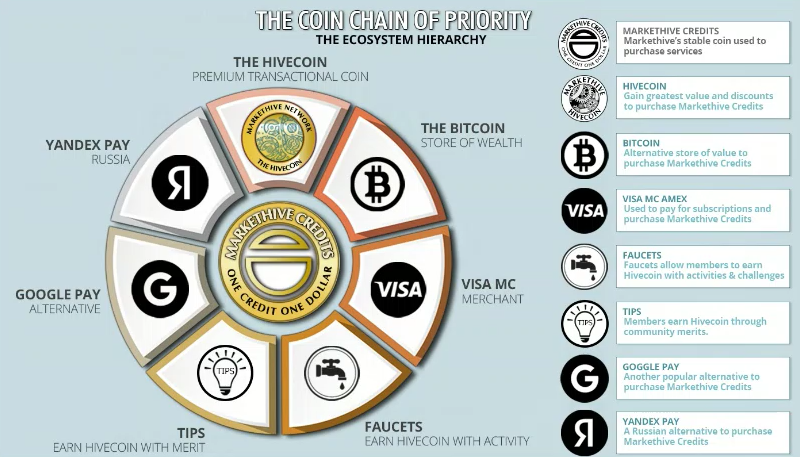
Currently, Markethive is diligently focused on its iteration phase, building out its revenue-generating system of retail products and services. This includes listing Hivecoin on crypto exchanges, starting with IndoEx,
and enabling new customer acquisition through Promo Codes. As these
developments progress, the Markethive ecosystem of inbound marketing
services is becoming increasingly attractive to businesses.
The Markethive Ecosystem: Empowering Companies and Affiliate Programs
Markethive provides a complete, integrated suite of services
designed specifically to support companies and significantly boost the
performance of their affiliate programs. This pioneering platform is
much more than a collection of networking tools; it forges a holistic,
connected business ecosystem.
Forward-thinking
affiliate companies are increasingly recognizing this value and have
successfully integrated their operations into the Markethive ecosystem.
This collaborative environment enables these companies to actively
promote their diverse offerings to a highly engaged, targeted community.
Seamless Integration: The Power of the "Supergroup" Marketing Hub
The
integration process is engineered for maximum efficiency and deep
engagement. When a company's offerings are promoted, both its existing
and newly recruited members are seamlessly directed to a dedicated
digital space known as a "Supergroup."
This
supergroup functions as the company's private, branded marketing hub
within Markethive. The foundational element of every supergroup is a
meticulously crafted, company-specific landing page. This page is
meticulously designed to capture leads, provide comprehensive
information, and drive conversions.
This
remarkable, frictionless integration between the external company and
the Markethive platform is achieved via a secure, robust socket
connection. This technological backbone ensures real-time data
synchronization and secure communication, fostering simple, continuous,
and effective collaboration between the affiliate company and its user
base within the Markethive community.
The Innovative Co-op System: A Foundation of Collective Lead Generation and Customer Acquisition
Markethive's
most distinctive and powerful feature is its innovative Co-op system,
which serves as the primary engine for customer and lead generation
across the network. It operates on a foundation of shared success and
collective contribution, moving beyond the traditionally siloed efforts
of individual marketers.
Customers
and qualified leads generated through the Co-op mechanism are not
concentrated with a single entity. Instead, they are intelligently
distributed and shared among active Markethive members. This precise
distribution rewards those who consistently contribute to the system's
growth and overall lead flow within a specific, designated supergroup.
This
highly collaborative and reciprocal approach ensures that all active,
engaged participants receive a steady, reliable, and diverse flow of new
leads. It fosters a true sense of community, mutual support, and shared
profitability, setting the Markethive model apart from the more
competitive and isolating traditional affiliate marketing structures.
This creates a network in which the success of the entire group directly
boosts each individual member's success.
Summary: The Entrepreneur Equalizer
Customer acquisition is the equalizer for everyone in Markethive
and its global network. Markethive is a revolutionary global platform
meticulously engineered to level the playing field for entrepreneurs and
businesses of all sizes. At its core, the mission is singular and
paramount: to guarantee customer acquisition success, universally
recognized as the foundational cornerstone of any enduring commercial
enterprise. To achieve this, Markethive has cultivated a robust,
constantly evolving inbound marketing ecosystem. This system is not
static; it is continually enhanced to integrate the latest marketing
technologies and strategies.
A
key differentiator for Markethive is its progressive, comprehensive
adoption of blockchain technology. This integration is coupled with the
deployment of strategically positioned decentralized data servers around
the globe. This combination ensures enhanced security, transparency,
data integrity, and resilience, giving users true ownership and control
over their digital assets and data within the ecosystem.
This
innovative, revolutionary approach to customer acquisition is
particularly transformative for network marketers, a demographic that
traditionally faces significant, chronic challenges in generating leads
and acquiring customers. The platform addresses these pain points
head-on by harnessing the unparalleled power of cooperative marketing.
A
standout feature is the advanced "supergroup storefront" functionality.
This enables Markethive members to move beyond individual efforts and
collaborate within powerful groups, effectively creating shared,
high-traffic digital marketplaces. This cooperation is key to fostering a
more equitable distribution of wealth throughout the community.
By
working together, members amplify their reach, share resources, and
collectively drive a much higher volume of qualified leads than they
could achieve in isolation, ultimately leading to greater collective and
individual success. Markethive thus serves as both a toolset and a
thriving collaborative economy.
.png)







.png)
.png)
.png)


.png)
.png)
.png)